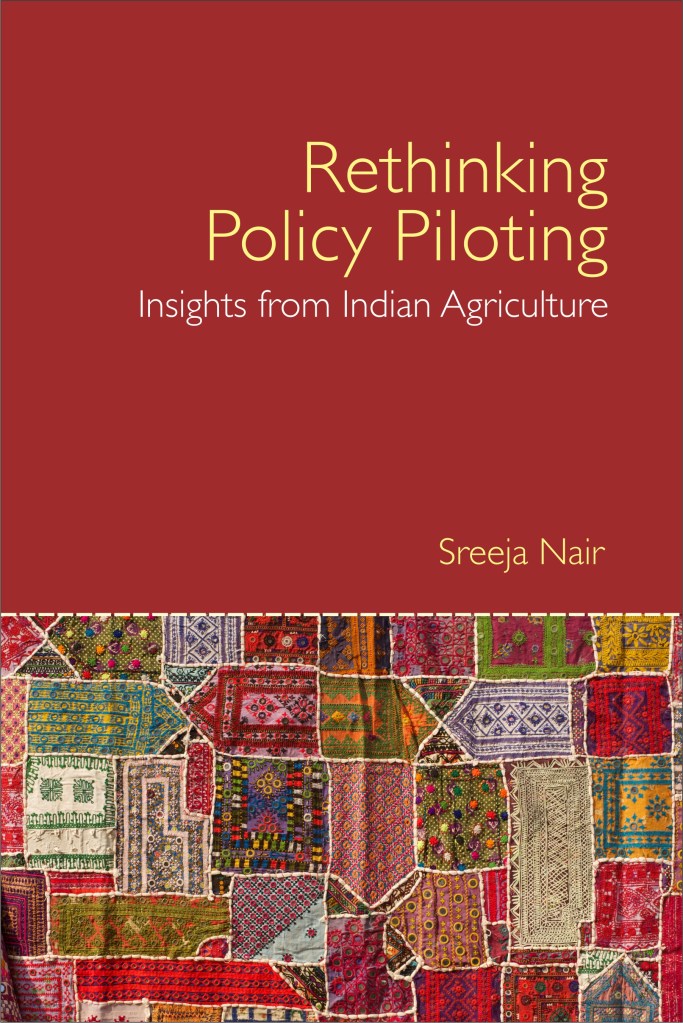
Rethinking Policy Piloting
Cambridge University Press
Policy experimentation and piloting are widely endorsed as tools for evidence-based policymaking, yet the design features that shape whether and how pilots integrate into formal policy remain insufficiently understood. This book offers a systematic empirical analysis of thirteen national-level agricultural policy pilots in India over twenty-five years from 1990, coinciding with the country’s liberalization and decentralization reforms, with the aim of informing future piloting. The central question under examination is: how do design features of pilots influence their diffusion?
Drawing on policy design and experimentation literatures, four causal conditions influencing pilot diffusion are identified: (1) vision for scaling up, (2) governance arrangements and actor diversity, (3) alignment with existing policy goals, and (4) alignment with existing policy instruments, recognizing that changes in goals and instruments represent analytically distinct forms of policy change. The empirical analysis is based on documentary evidence and interviews with key informants involved in the design and implementation of these pilots across major agrarian states. Fuzzy-set Qualitative Comparative Analysis (fsQCA) is applied to examine how these conditions combine across cases.
Three findings stand out. First, pilots are more likely to scale up and integrate into formal policy when they articulate a clear vision for diffusion, though high intentionality risks compromising their experimental logic. Second, non-governmental actor involvement in pilot governance creates greater scope for experimentation with new policy goals. Third, centralized government governance produces more measured experimentation, focused on policy means rather than ends. Together, these findings call for a rethinking of pilots and their contribution to policy design and formulation under risk and uncertainty. Pilots need not be radical to be valuable, success is not reducible to geographical scale-up, and the political nature of piloting explains why marginal change to existing policies are more commonly seen than transformation.
The analytical framework travels well beyond Indian agriculture and is applicable to policy formulation under uncertainty in sectors such as water, health, energy, housing, transport, and education, across federal governance systems globally.
This summary is freely available for use in your research, literature reviews, and teaching. Please cite as: Nair, S. (2021). Rethinking policy piloting: Insights from Indian agriculture. Cambridge University Press. https://doi.org/10.1017/9781108885867
Book review in Public Administration Review: https://onlinelibrary.wiley.com/doi/10.1111/puar.13625
Video summary: Author Speaks – Sreeja Nair
Blog post in Policy Studies Journal: https://psjblog.net/2024/07/10/rethinking-policy-piloting-managing-uncertainty-in-the-policy-process/
Emerging Pedagogies for Policy Education: insights from Asia
Palgrave Macmillan
This edited book captures key trends that are driving changes in policy education and presents a repertoire of pedagogies to prepare educators and policy programme designers to teach for better impact in learning and policy practice.
Part I of this book presents ideas that are asserting the need for incorporation of new content as well as teaching practices for policy education. Part II covers selected cases of application of pedagogical approaches and strategies in Asian universities, tested at different education levels, modes of teaching, and disciplines

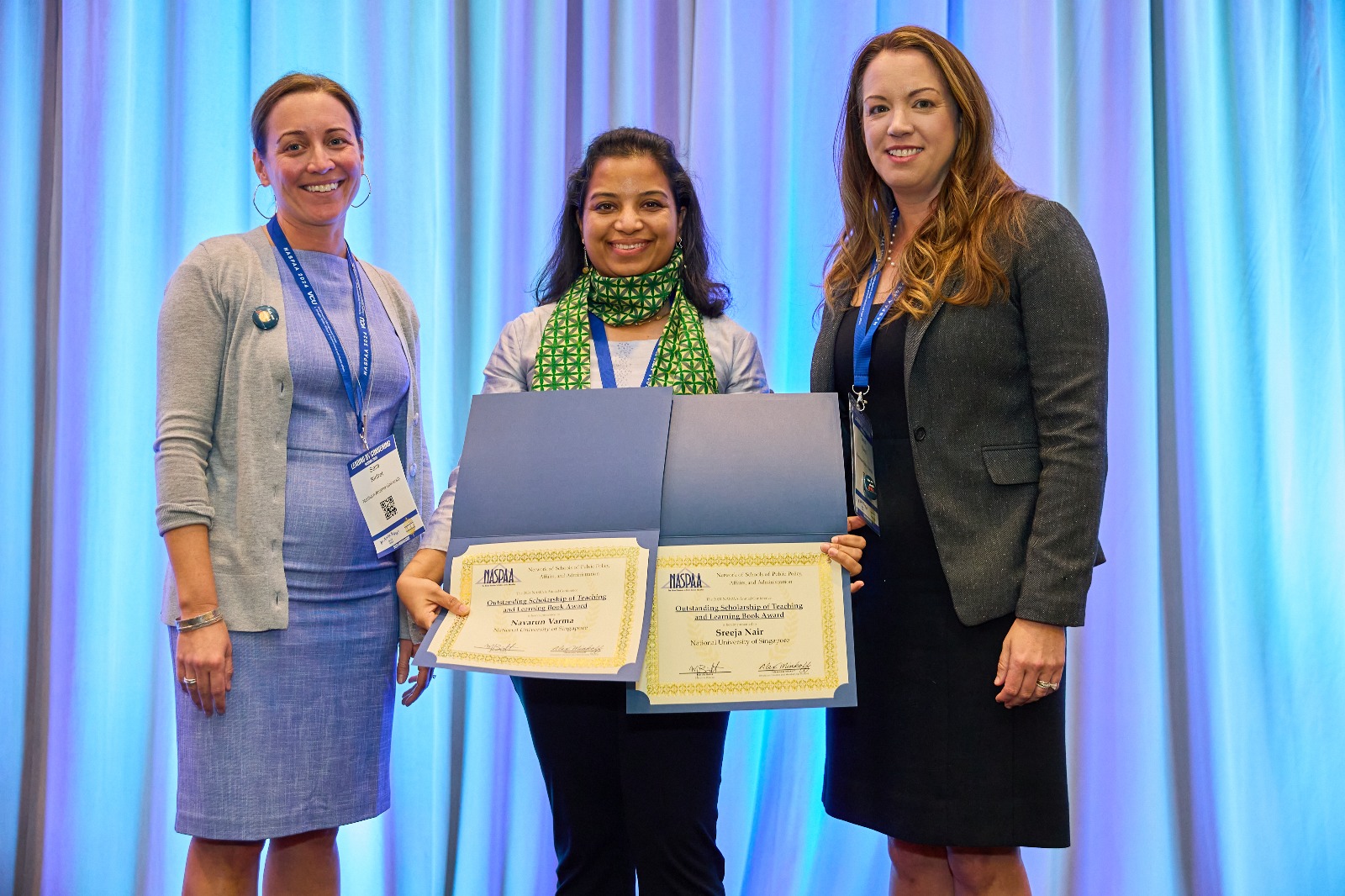
Saving Lakes: The Urban Socio-cultural and technological perspectives
World Scientific
This book examines the interplay of socio-cultural and technological dimensions for the protection and remediation of a tropical urban lake, and how these guide the design of need-based solutions. It explores design requirements with sensitivity to local religious and cultural norms, social values and aesthetic requirements. The authors document their first-hand experiences in planning and executing an urban lake remediation project in the city of Kandy (Sri Lanka)- a fast-growing city and UNESCO heritage site. The lessons learned can be applied to other lakes of cultural significance in tropical regions.
Available at: https://www.worldscientific.com/worldscibooks/10.1142/11014
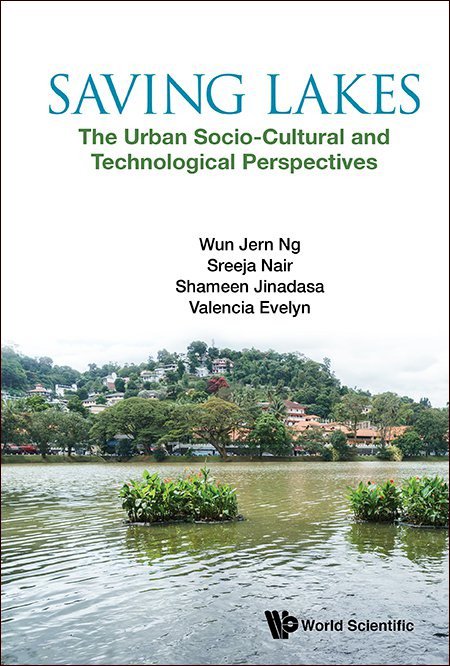
 Sreeja Nair